Partners

The Centre for Research and Technology Hellas was fοunded in March 2000, it is a legal entity governed by private law with non-profit status, supervised by the General Secretariat for Research and Innovation (GSRI) of the Greek Ministry of Development. CERTH suggests one of the most important Research Centers in Greece with a main mission: The promotion of innovative research for the benefit of society. Dedicated to this purpose, CERTH lies at the forefront of basic, applied and technological research to provide solutions to society’s modern challenges.
Artificial intelligence, advanced robotic systems, the internet of things, Industry 4.0, clean energy, advanced materials, circular economy, autonomous vehicles, smart cities, precision medicine, holistic health-nutrition approach, precision agriculture and agro-robotics, are the primal fields around which CERTH’s five (5) institutes are organized.
Chemical Process & Energy Resources Institute – CPERI, Information Technologies Institute – ITI, Hellenic Institute of Transport – HIT, Institute of Applied Biosciences – INAB, and Bio-economy and Agro-Technology Institute – IBO, bring together more than 1500 people (engineers and scientists in their majority), in 7 regions and 9 cities of Greece.
CERTH places a strong emphasis on innovation, which is demonstrated -among others- by establishing collaborations with the industry. The commercial exploitation of the mature, innovative, technological findings of CERTH, has led to the creation of 21 spin-off companies with significant economic activity, including the attraction of financing from investment funds.
The International Hellenic University (IHU) is a public university located in Thessaloniki, Greece and one of the largest Universities in Greece. It consists of 9 Schools and 33 Departments. Founded in 2005, the IHU is an international research-led institution with a focus on education (both under- and post-graduate). The university offers a wide range of programs in various disciplines, including business, law, engineering, computer science, and humanities. The university’s commitment to academic excellence, innovative teaching, and research-driven curriculum has made it one of the leading institutions of higher education in Greece and the wider region.
The Department of Management Science and Technology (MST), founded in 2019, is one of the most dynamic academic departments at the IHU, offering a range of undergraduate and postgraduate programs in the fields of management, technology, and innovation. The department’s mission is to develop leaders who can manage the complex and rapidly changing global business environment, combining cutting-edge technology with sound management practices. It is comprised by high experienced and qualified staff, who have participated in more than 100 research projects (European and national), with more than 1.000 scientific publications, which have been cited about 15.000 times.
The European Federation of Rural Tourism – RURALTOUR is a professional tourism trade organisation representing a sector with an estimate of 500.000 micro-and nano enterprises and about 5-6,5 million bed places . It includes 26 professional and trade organisations from 23 countries of geographic Europe. The represented services include hospitality from rural Bed&Breakfast and self-catering in private homes or farms up to small family-run rural hotels or guesthouses, rural gastronomy, and active tourism services.
Ruraltour is active in improving member’s international competitiveness in fields of digitalization, adaptation to consumer demand, sustainable design and management of services, and related skills development. We especially focus on the design of new products and approaches to international markets under the overall concept of a sustainable tourism activity in rural areas. Our participation in transnational projects in the field of training or research feed directly into the business reality through our member organizations that use these results to provide business support and advice to their associated SMEs.
CO “Kinburn” has been operating since 2018. The Organization mission: implementation of ecological, scientific, educational initiatives in the territory of the Mykolaiv region.
The Organization Aims: satisfaction and protection of legitimate social, creative, economic, scientific, cultural interests of the Organization members.
CO “Kinburn” has successful experience in implementing grassroots initiatives for the development of rural regions in the Mykolaiv region.
The implemented projects were aimed at the development of sustainable tourism and local business based on the sustainable use of the Northern Black Sea recreational and tourism potential. Developed eco-friendly startups that promote as tourist locations local cultural material and intangible heritage. A basis for tourist development of the Black Sea coast of the Mykolaiv region was created.
CO “Kinburn” for more than 5 years has been providing cooperation and successful communication with local authorities, businesses, experts and other interested parties on the territory of Ochakiv and Kutsurub territorial communities of the Mykolaiv region, and also serves as an important platform for coordinating local development in the spheres of economy, ecology, tourism, culture and democracy protection.

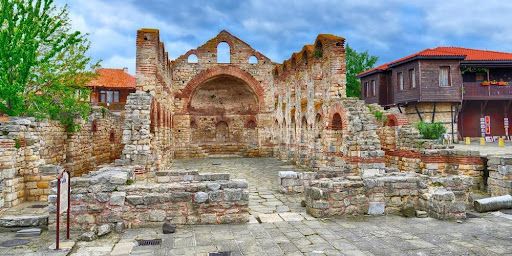
Nessebar is an ancient city located on the Bulgarian Black Sea Coast, in Burga Province. Nessebar is an area rich in history of more than 3.000 years. The city exists in two parts separated by a narrow human-made isthmus with the ancient part of the settlement on the peninsula (previously an island), and the more modern section (i.e. hotels, later development) on the mainland side. It is one of the most prominent tourist destinations and seaports on the Black Sea.
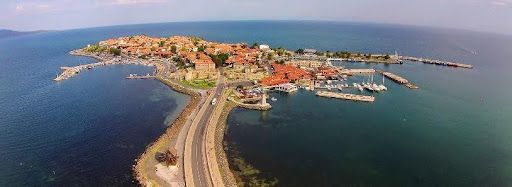
Nessebar keeps tangible remains of civilizations of medieval and modern Bulgarians, ancient Thracians, Greeks, Romans and Ottoman Turks as well as a number of unique traditions related to intangible cultural heritage of Bulgaria. The town combines both – large sparsely inhabited and not touristic rural areas and densely populated tourist agglomeration on its southern coastal area. The national archaeological and architectural reserve “Ancient Nessebar” is an UNESCO Cultural Heritage site, attracting cultural tourists world-wide. Large areas, incl. zones of adjacent sea, fall within Natura 2000, the pan-European network of protected natural habitats, wild flora & fauna. The suitable environmental conditions – warm summers, wonderful beaches, well preserved nature and cultural heritage sites – are factors influencing the structure of local economy – economic tourism. Currently the economy in rural areas is based on small scale agriculture, forestry management & seasonal engagement of population in the coastal resort.
Balkan Heritage Foundation (BHF), Bulgaria is a non-profit cultural organization operating in the field of cultural heritage research, preservation, communication, utilization, management, and education. Its geographical focus is on SE Europe and adjacent regions. Since its establishment in 2008 the Foundation has been active in Bulgaria, Greece, Israel, Montenegro, North Macedonia, Serbia and Slovenia. The organization aims to build greater global appreciation and solidarity for the cultural treasures in SE Europe, to attract new resources for their study and preservation and to pursue global collaborations in benefit of the cultural heritage, as a precondition for sustainable development of the region. During the last 16 years the organization conducted or supported numerous archaeological, conservation and heritage management or communication projects, exhibitions, conferences and seminars, hundreds of field schools, and trainings, as well as a joint MA program across the Balkans and Eastern Mediterranean. In 2018 the Balkan Heritage Field School – the BHF’s oldest program received a special mention by Europa Nostra Award Jury for its extensive contribution to education in archaeology and conservation, through multinational collaboration. The BHF has been collaborating with a large network of governmental, research and academic institutions, as well as with many non-profit and business organizations across the globe and succeeding to raise funds from major EU, North American and local donors and funding programs.
The BHF will serve as a task leader for sustainability/barriers assessment in TOURAL sites and individualization of the UCCST model through co-design and will contribute to the sustainability assessment, dissemination and communication of the project.
BOURGAS REGIONAL TOURIST ASSOCIATION (BRTA) was established in 1998 as NGO in public benefit. It unites the existing in Burgas region local tourist organizations, regional tourist associations and local authorities (municipalities). The goal of BRTA is to support and encourage the development of tourism in Burgas region and alone or in cooperation with other organizations working to develop the region as a tourist destination. BRTA is registered in accordance with the requirements of the Tourism Act in Bulgaria.
Priorities for international cooperation:• Promotion of Burgas Region;• Territorial cooperation;
- Exchange of experience and Good Practices.
BRTA has 25 years of experience in development and implementation of projects. The main scope of activities is development and promotion of tourism products and packages, training and provision of consultancy and information to entrepreneurs and municipalities, promotion of the region, sustainable tourism development. BRTA works in close cooperation with its member’s municipalities and local tourist organizations, the educational institutions in Burgas region, all regional governmental bodies. It has a big network of external experts, which are used for implementation of projects. Some of the implemented projects are: (i) “Preservation of Biodiversity and Economic Growth in Strandzha and The Wet Zones In The South Black Sea Coast”, funded by the Bulgarian-Swiss Biodiversity Programme, (ii)Preparation of the national ecotourism strategy and 2 regional plans for ecotourism development “East Stara Planina” and “South Black Sea Coast, Strandzha and East Thrace”, (iii) “Promotion of Sustainable Development in Stranja Mountain Area”, funded by the EC, (iv) ) “CO2Free project”, under INTERREG IVC, (iv) Integrated Land-use Management Modelling of Black Sea Estuaries (ILMM-BSE) , funded by Joint Operational Program “Black Sea Basin. (v) Developing Senior Tourism in Remote Regions – TOURAGE project, funded by INTERREG IVC Programme
BSEC is the oldest (established in 1992) and most representative regional organization promoting economic cooperation in the wider Black Sea area. Aiming at fostering interaction and harmony among its members, encouraging friendly and good-neighborly relations in the Black Sea region, today BSEC serves as a trusted vehicle for cooperation in a wide range of areas (culture, tourism, science and technology, education, environmental protection, agriculture, energy, SMEs, transport and etc.) for its 13 Member States and beyond. The “greater BSEC family” was in the mean-time enriched by 4 other autonomous entities (the Parliamentary Assembly of BSEC (PABSEC), the Black Sea Trade and Development Bank (BSTDB), the International Centre for Black Sea Studies (ICBSS) and the BSEC Business Council), which greatly contribute to the promotion and implementation of the Organization’s objectives.
During its 32 years of activity the Organization implemented a big number of regional cooperation projects, launched numerous sectoral Associations of public and private entities, established many specialized Networks of experts and other interested stakeholders, served as an important platform for better coordinating regional cooperation, established working relations with many International Organizations (UN Agencies, EU, etc.) and was involved in concrete efforts for economic development funded either by its Member States or by third sources.
The BSEC Organization, alongside with its concrete and substantial contribution for the overall development and growth in the region, serves also as a valuable, first-level, confidence-building mechanism.
The International Centre for Black Sea Studies (ICBSS) (est. 1998) is an independent research and training institution focusing on the wider Black Sea region, and a related body of the Organisation of the Black Sea Economic Cooperation (BSEC) and its think tank.
The ICBSS’ main objective is to advance knowledge on important issues of the Black Sea region and foster multilateral cooperation among regional and international partners.
ICBSS’ diverse activities include the organization of scientific events, the management of research projects, the elaboration and publication of research papers and studies, and the development of capacity building and networking activities. As BSEC related body and think tank, the ICBSS participates in the deliberations of the BSEC Organisation, and drafts policy documents and coordinates scientific activities upon specific mandates by BSEC.
The Centre invests in policy-oriented research and capitalizes on its dual role to support advocacy in fields of acute interest for the wider Black Sea region, inter alia, tourism, culture, blue economy, education, transport, energy, environment, science, technology and innovation. Placing special focus on fostering relations between the EU and the Black Sea region, the ICBSS is the Coordinator of the Ad hoc Group of Experts on BSEC-EU Interaction, since 2008.
As part of TOURAL, the ICBSS leads WP2 that will support policy pathways, stakeholders’ engagement and co-creation of business models.
Created in 2002 and located in the countryside of the Teramo Province (Abruzzo Region – Italy), ITACA is a non-profit association focused on sustainable development by means of integration, diversification and coordination of the territorial resources. Its mission is to develop projects and initiatives fostering local resources at both local and EU level, with a special attention to rural and marginalized areas, by supporting entrepreneurship, networking, mobility, education, training and awareness-raising on various topics, involving our associates and the local communities and promoting the values of sustainability, cooperation and active citizenship.
Network members are public authorities, SMEs, citizens, other associations and our main fields of action are art, culture, employment, rural development, environment, social, sports, tourism, youth.
Examples of activities we can run: research, partnership building, workshops, seminars and training courses, project coordination and management, information and technical assistance, event organization, communication, sharing of best practice.
ITACA has a consolidated experience in the field of development of place-based strategies aimed at improving the revitalization of local communities, especially in remote and rural areas, as well as in co-designing cultural tourism itineraries for the enhancement of the historical and cultural heritage in rural districts. In these fields, it cooperates with regional and local authorities in the elaboration and implementation of public initiatives and regulatory frameworks for the promotion and diversification of tourism.

The Conference of Peripheral Maritime Regions (CPMR) represents more than 150 regional authorities from 24 countries across Europe and beyond. Organised in geographical commissions, the CPMR works to ensure that a balanced territorial development is at the heart of the European Union and its policies.
The CPMR is present in TOURAL’s region of interest through its Balkan & Black Sea and Intermediterranean Commissions, and has a dedicated Adriatic-Ionian Task Force focusing on the developments in the EUSAIR area.
The CPMR will be involved in the TOURAL Project through its Balkan & Black Sea Commission, supporting the policy work, communication, dissemination, and engagement activities throughout TOURAL’s duration. The CPMR will do so by merging its previous relevant experience on creative industries, sustainable tourism, and regional cooperation among others with the valuable input stemming from its Member Regions. Furthermore, the CPMR, as the supporting organisation of the Cultural and Creative Regional Ecosystems (CCRE-S3) partnership under the S3 Community of Practice of the European Commission, will support the multi-stakeholder dialogue for new models of tourism twin transition paradigms that contribute to strategic investments to support the deployment and growth of the TOURAL pilot sites, as well as to outreaching the TOURAL objectives and expected outputs to an increasing number of regional audiences represented in CCRE-S3.
Association Local Action Group Danube Delta (GAL DD) is a non-profit association, authorized by the Romanian Ministry of Agriculture and Rural Development within Measure 19 – Leader, National Program of Rural Development 2014 – 2020. GAL DD has operated since 2016. It is located in South-Eastern Romania (very close to Tulcea Municipality), on Danube Delta area up to the Black Sea – including mostly rural communities, known for environmental heritage and cultural traditions of the ethnical groups. All communities on GAL DD territory border are totally or partially included within The Biosphere Reserve of Danube Delta – out of which there are 2 communities situated on the Black Sea coast, Sulina and Sfântu-Gheorghe. Danube Delta is the largest remaining natural delta in Europe and one of the largest in the world, with valuable habitats for specific delta wildlife and biodiversity.
The main types of economic activities identified in GAL DD area are those related to tourism, fishing and subsistence agriculture, while the service sectors, craft activities and non-agricultural production are still underdeveloped. Tourism sector needs to be developed as offering diverse and complementary services, with the condition of preserving the natural heritage and cultural resources of the rural communities. A dual challenge for the sustainable development of the Danube Delta is the conservation of its ecological assets and the improvement of its residents’ life quality.
Competencies of the Association GAL DD is gathered through different projects that have been implemented, networking activities through LEADER and ELARD, participations within European platforms and seminars on rural development, writing strategies or assessments regarding the sustainable development of DD territory. The activities in which GAL DD is involved are linked with different fields, such as protection of cultural and natural heritage, education, tourism and promoting local business, all based on the goals defined through local development strategy, together with communication and dissemination.
The National Ecological Centre of Ukraine (NECU) is an ecological non-governmental non-profit organization which aims to create a healthy environment and improve the quality of people’s life in Ukraine. NECU was established in 1991 and has consolidated scientists, journalists, artists, students and other individuals for joint and solid actions to protect the environment
The organization has 20 branches in different regions, in particular, in all the Black Sea regions of Ukraine. NECU works to bring environmental consideration into the core of any decision. We aim to bring concerns of the local population and experts to the politicians, to redesign strategies and projects. We work both to save nature, by maintaining and creating new protected areas, and to decrease human impact on the environment, through policy changes in energy, transport and other sectors. Among our priorities: preservation of biodiversity and water resources, climate change, transport, waste management, opposition to traditional energy (nuclear, hydro, etc.) and development of RES, ecosystem approach, work with local communities, promotion of European integration of Ukraine, as well as the most recent ones are assessment of environmental damages due to the russian war and green recovery of Ukraine after the war.
NECU is actively cooperating with other non-profit groups and separate citizens. NECU is a member of the following associations and networks: WG3 «Environment, Climate Change and Energy Security» Ukrainian National Platform of the Eastern Partnership Civil Society Forum, WG5 5 «Energy, Transport, Environment and Climate Change» EU-Ukraine Civil Society Platform, the public council under the Ministry of Environmental Protection and Natural Resources of Ukraine, the Ukrainian NGOs Working Group on Global Climate Change, Ukrainian River Network, CEE Bankwatch Network, Transport&Environment. NECU is represented in the working group “Ecological safety” of the National Council for the Reconstruction of Ukraine and the working group on damage assessment of russian military aggression on the environment.
Regione Abruzzo is a public authority with political and administrative powers. Concerning tourism, it is responsible for its regulation, promotion policies and regional organization. To this extent, it is deeply committed to foster synergies between tourism and local development to favor the improvement of the quality of life, sustainability, promotion and protection of the territory, the income and cultural growth and entrepreneurship. Sustainable development, including soustainable tourism, is at the core of the Abruzzo Region and the regional Plan of sustainable development which has been recently aproved.
Public institution ZADRA NOVA has been established in 2013 and took over the tasks previously managed by Zadar County Development Agency ZADRA Ltd. Stakeholders of ZADRA NOVA Agency are Zadar County with 60% stake and City of Zadar with 40% stake. As regional coordinator, the Agency is managing assignments and activities of public interest as defined per Law on regional development of the Republic of Croatia. Acting as a regional development agency and by cooperating with regional public bodies and local authorities, the Agency has the capacity to influence policies on local and regional level. ZADRA NOVA was established to support local capacities in the implementation of EU Structural Funds and regional development policy in Zadar County. Thematic competencies of the Agency have been gathered through the preparation and implementation of various projects. ZADRA NOVA is a member and creates networks of reliable partners from local governments, institutions, universities, associates and EU experts, and strengthens the interregional and cross-border cooperation. Until the date, the Agency has implemented more than 100 projects financed by the EU and national funds. The areas of investment are different – education, communal infrastructure, protection of cultural and natural heritage, energy efficiency and other, all based on the development needs, potentials and goals defined in strategic documents. In addition to human capacities that have satisfactory qualities, and experience, and meet the criteria for the successful implementation of the project and its sustainability after the end of the project implementation period.
Aix-Marseille University (AMU) is the largest multidisciplinary French-speaking university in France, with 80,000 students and nearly 8,000 staff on five large campuses that meet international standards.
Aix-Marseille University is ranked as the first Euro-Mediterranean University (http://www.univ-amu.fr/en) and a top-class higher education and research institution. It is the only University in France specializing in research and education in Maritime and Underwater Archaeology and runs the only Master Program in France dedicated to maritime and underwater archaeology (MoMArch- MA in Maritime and Coastal Archaeology – https://momarch.hypotheses.org/).
AMU hosts the UNESCO Chair in Maritime and Coastal Archaeology and is currently chairing the UNESCO Unitwin network for Underwater Archaeology (2023-26). In this context, AMU will organise the ecoRoute an international workshop, as the final open event of the project.
AMU will participate in Toural with three CNRS Laboratories and one Research Institute comprising a wide range of experts known in international level, specialising in key activities of the project:
- Centre Camille Jullian – CNRS (UW archaeological research and training; connection with tourist industry & operators, public national/local entities; promoting green practices for managing UCNH sites & diving operations; impacts of climate change in UW and coastal cultural sites);
- ARKAIA Institute of Mediterranean Archaeology (communication/dissemination in UW archaeology);
CEREGE, the European Centre for Research and Teaching in Environmental Geoscience, (biodiversity, sustainable environmental/circular economy, climate change);
The Municipality of Alonissos is the public body of the island of Alonissos, which is located at the Northern Sporades Island chain, at the Prefecture of Thessaly, Greece. The island has a population of approx. 3.100 citizens and within its greater area exists the National Marine Park of Alonissos, one of the largest protected areas of the Mediterranean Sea. The National Marine Park acts as home to the 25% of the world’s population of the Mediterranean Monk Seal, the rarest mammal in Europe, as well as to hundreds of endangered species, including mammals, birds, reptiles and medicinal plants.
According to acclaimed travel websites, Alonissos is currently among the top seven sustainable tourist destinations worldwide, not only because of the existence of the National Marine Park, but also due to the operation of the Underwater Museum of Alonissos, which features a 5th Century BC shipwreck, that is up to the present considered as the most ancient visitable shipwreck worldwide.
During the last 20 years, tourism has been the main source of income for the island of Alonissos. An increase in tourism usually triggers an upwards trend in infrastructure development, investment influx and population increase due to business proliferation. The island of Alonissos has successfully navigated though these changes balancing progress and socio-economical growth with environmental sustainability. The Municipality’s vision is to continue to improve and enrich the services towards visitors without compromising the island’s customs, traditions or environmental consciousness. It aims to increase the annual number of visitors, to incentivise outside capital fortifying the island’s financial prosperity while preserving its natural environment, history and cultural identity.
The local community’s dream is to promote an alternative style of tourism and to attract visitors from all kinds of social and financial strata offering a variety of activities and services. A holiday destination need not be over-crowded nor ordinary. Environment, locals and visitors can co-exist in harmony via an eco-friendly model for tourism. The Municipality actively promotes a truly sustainable model for the island where diving, sport fishing, collection of medicinal herbs and trekking are among the key activities. Moreover, Alonissos is becoming a popular wedding destination. Combining eco – friendly services with natural products it aspires to continue to distinguish among other destinations in Greece and Europe.
Municipality of Skopelos (MoS) belongs to the Regional Unit of Sporades with headquarters in Skopelos town. Municipality of Skopelos has a population of 4,848 inhabitants according to census of 2021. Skopelos has an aera of 92 sq. km and a perimeter of 97 kilometres. Municipality of Skopelos is composed of three communities: Skopelos, Klima and Glossa.
TOURAL proposes a model to support the touristic development of participating rural regions, balancing the growth of their urban clusters with the untapped growth potential of their remote and rural grid cells. Within TOURAL project, Municipality of Skopelos, as Skopelos is one of the pilot site/rural- remote region, will propose and develop a Rural Action Plan.
Participating in TOURAL project is a great opportunity for Municipality of Skopelos to achieve cultural, sustainable, and creative tourism development through the design and the implementation of UCCST Model and Knowledge Awareness Center.
The Province of Teramo is a local authority specializing in land and urban planning, environmental issues, and mobility. The territory comprises 47 municipalities with a combined population exceeding 300,000 inhabitants.
The ‘Toural’ project aligns seamlessly with our organization’s mission, especially considering our role as a network of local authorities and our focus on sustainable city development. The Province of Teramo will actively collaborate in promoting initiatives through its network of members and utilizing communication tools. Additionally, it will contribute to the transferability of practices within our region.
Participating in the ‘Toural’ project presents a significant opportunity for the Province of Teramo. The province is dedicated to achieving a strategic development scenario for the territory by reorganizing and revitalizing existing rural and mountain settlements. This includes promoting alternative forms of tourism to mass tourism (such as the development of niche sectors) and ensuring a sustainable balance among different territories.
The identified objective in Toural, where cultural, sustainable, and creative tourism can drive economic development in rural and remote areas, strongly resonates with the goals of the Province of Teramo. For years, the province has been actively involved in rebalancing the weight of territories through targeted tourism policies.
Within the Toural project, the Province of Teramo will focus on constructing and transferring growth strategies to the territories. This involves identifying local experimental interventions, evaluating the sustainability of these interventions, and disseminating project results through effective communication.”

ATLANTIS Consulting is a private firm (est. 1992), composed of highly skilled employees (engineers, economists, IT and science & technology experts). The company has experience in the management and implementation of national/international projects in the fields of sustainable tourism valorisation of underwater archaeology, designing and testing of underwater technologies, ICT research, innovation policy, investment readiness, innovative financing (e.g. Business Angels Networks), evaluation and impact assessments for public and private organizations et al. ATLANTIS has significant experience from projects aiming at promotion of culture, “blue” technologies and the exploitation of the underwater wealth (cultural and natural) for the benefit of the European economy. In recent years, ATLANTIS by coordinating or participating in Greek and European/MED projects (i.e. DiveSafe, BLUEMED, BLUEMED PLUS, UCRCA, MAGNA, BCThubs-see section C2.6) have contributed to tangible achievements such as:
- The characterization as accessible ancient wrecks of the Greek seas (currently about ten including four in Alonissos and three in the western Pagasitikos), which contributed to the growth of maritime tourism in these areas.
- The development of technologies which support the exploitation of the underwater heritage (and natural) wealth of the MED, such as digitization for the creation of 3D models of reconstruction underwater archaeological sites, the use of new technologies for the recording of marine archaeological sites, the use of new technologies for recording archaeological research, virtual (VR/AR), augmented tours, virtual diving applications, open marine archaeological research workshops, etc.
- Submission of proposals for the operation of the accessibility of underwater archaeological sites at a national level through their integration in EU/National funding programs, in Regional Operational Plans, etc.
- Promotion, at local and international level, of the principle that the protection of the underwater archaeological heritage presupposes the touristic development and awareness creation primarily for the benefit of the local communities and always having as a basis the principles of sustainable development.
- Signing of MoUs local stakeholders, for further collaboration for the protection and promotion οf UCH Sites.